Understanding Noise Before You Install
Noise is one of the key factors to consider before installing a small wind turbine. You need to know whether the turbine fits the site, how much sound it may produce, and which design features support comfortable operation.
A turbine will always create some sound because it is a rotating energy system. Yet good blade design, generator technology, rotor balance, and vibration control can greatly reduce unnecessary noise.
Small Turbines Are Different from Utility-Scale Turbines
Residential, agricultural, marine, and off-grid systems operate under very different conditions from large wind-farm turbines.
For a small energy project, power output is only one part of the decision. A suitable turbine must also balance stability, vibration, maintenance, installation conditions, and operating sound.
Open and stable airflow usually supports smoother operation. Buildings, trees, roof edges, and other obstacles can create turbulence, increase vibration, and reduce energy production.
Can Small Wind Turbines Cause Tinnitus?
Current research has not established that properly designed and installed small wind turbines directly cause tinnitus or permanent hearing damage.
Tinnitus is complex. Aging, exposure to loud sound, ear conditions, stress, and other health factors can all influence it. Wind turbine research has focused mainly on sound perception, annoyance, sleep quality, low-frequency sound, and possible health effects.
The key distinction is simple: a sound you can notice is not automatically intense enough to damage hearing.
Research referencesSystematic review available through the National Library of MedicineWashington University School of Medicine: low-frequency sound and the inner ear
How Much Noise Does a Small Wind Turbine Produce?
There is no single number for every turbine. The result changes with turbine design, wind speed, distance, turbulence, mounting structure, and background sound.
What Creates Turbine Noise?
Most operating sound comes from three connected areas.
Blade airflow
Rotating blades interact with moving air. A poor aerodynamic profile creates stronger turbulence, producing more sound and wasting energy. Optimized blade geometry and composite materials support smoother airflow.
Generator and mechanics
Generator resistance, bearings, and rotating components affect smoothness. A coreless three-phase AC generator can lower starting torque and reduce magnetic resistance for smoother rotation.
Structural vibration
Sound may travel through the tower, roof, or mounting structure. Rotor balance, bearing quality, tower stability, fastener torque, and installation accuracy all influence the final result.
How Modern Designs Reduce Noise
A quieter wind turbine is not created by one feature. It comes from aerodynamic blades, an efficient generator, balanced rotating parts, quality bearings, and a stable support structure working together.
The ELEGE EV vertical axis wind turbine uses composite blades and a coreless three-phase AC generator. Its low starting torque supports smoother operation when wind is light or variable.
Third-party noise test
Measured Evidence, Not Just a Product Claim
ELEGE commissioned professional equipment-noise testing through Suzhou HST Environment Technology Co., Ltd. The recorded result was 39 dB(A) on October 28, 2025.
This result shows that a properly engineered small wind turbine can reach a comfortable sound level for distributed-energy applications under the stated test conditions. Real installations will vary with wind, distance, mounting, surroundings, and measurement method.
From Test Data to a Real Outdoor Site
Technical specifications matter, but an actual installation provides useful context.
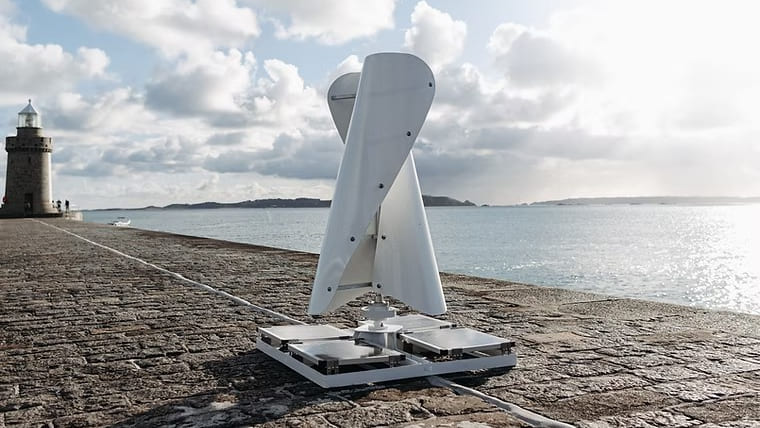
This marine installation shows how a compact vertical-axis turbine can fit into a real outdoor energy system. Correct siting, a rigid mounting structure, accurate assembly, and regular inspection all influence long-term performance and operating comfort.

How to Choose a Quiet Small Wind Turbine
Do not select a turbine only by its maximum wattage. Match the complete system to the actual site.
Check the wind resource
Use local wind data or a site assessment. Stable airflow normally improves both energy output and operating smoothness.
Inspect obstacles and mounting
Buildings, trees, roof edges, and weak mounting structures can create turbulence or transfer vibration.
Match power to real demand
Estimate daily energy use and decide whether wind will operate alone or with solar panels and battery storage.
Review the complete design
Compare blade aerodynamics, generator type, bearings, braking, materials, test information, and after-sales support.
Need a Turbine Matched to Your Site?
ELEGE supplies small wind solutions for residential, agricultural, marine, and off-grid projects, with OEM and ODM support.
Better Engineering Creates Quieter Wind Power
Small wind turbines produce some sound, but modern blade, generator, and vibration-control design can keep unnecessary noise low. Research has not confirmed that small wind turbines directly cause tinnitus.
When choosing a turbine, consider noise, reliability, siting, installation, and maintenance alongside power output. The right turbine is the model that fits your environment and energy needs.
Frequently Asked Questions
Can a small wind turbine work with solar panels?
Yes. Many residential and off-grid systems combine a turbine with solar panels and battery storage. Wind and solar resources can complement each other and support a more stable energy supply.
How much maintenance does a small wind turbine require?
Requirements vary by turbine and environment. Regular checks of blades, bolts, bearings, the mounting structure, and electrical connections help maintain safe and reliable operation.
Where is the best place to install a small wind turbine?
Choose a location with useful, stable airflow and enough clearance from obstacles. Local rules, tower height, foundation requirements, access for maintenance, and distance from occupied spaces must also be considered.
Why choose a vertical axis turbine for residential use?
A vertical-axis design can accept wind from changing directions and may suit sites with more complex airflow. Its compact form is useful for distributed-energy projects, but the site still needs a proper wind assessment.