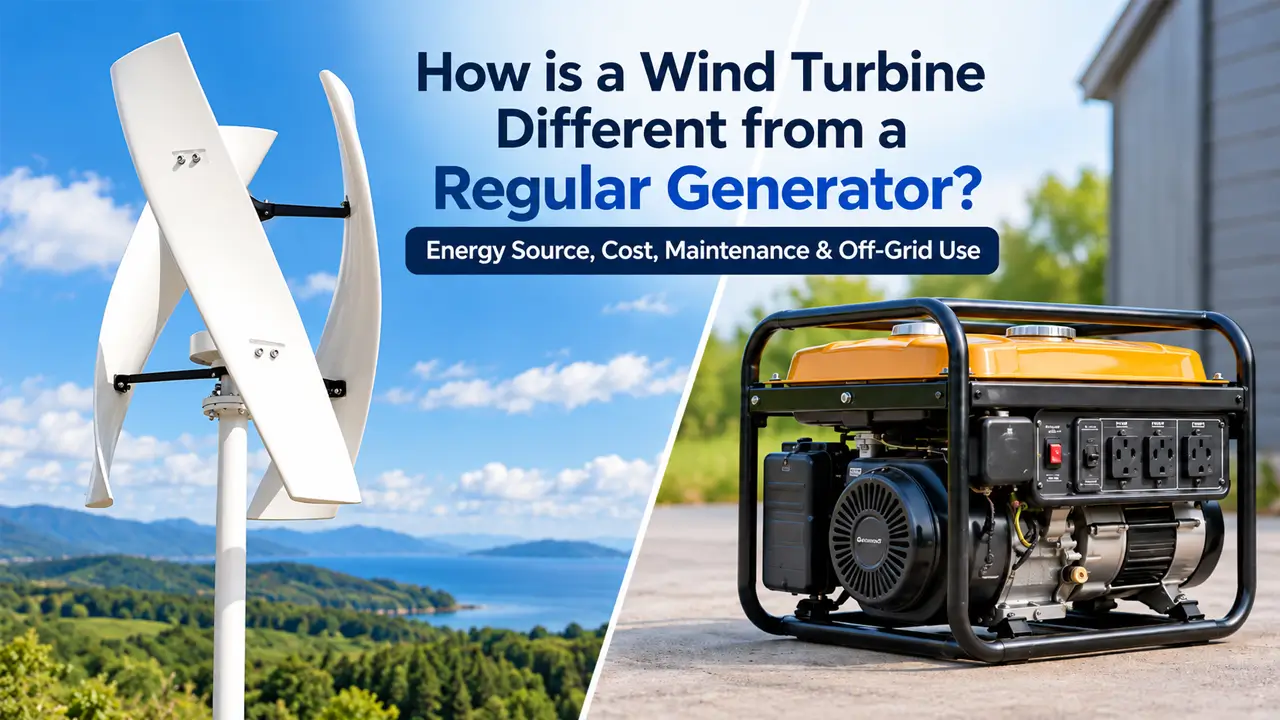
A wind turbine and a regular generator can both produce electricity, but they work in very different ways.
A wind turbine captures energy from moving air and converts it into electricity through an internal generator. A regular generator, such as a diesel or gasoline generator, normally uses a fuel-powered engine to drive the generator.
The key differences are the energy source, output characteristics, operating cost, maintenance requirements, and typical applications.
What is the main difference between a wind turbine and a regular generator?
The main difference is where the mechanical energy comes from.
A wind turbine uses blades to capture kinetic energy from the wind. The blades rotate a rotor, which drives the generator and produces electricity.
A regular generator usually relies on an internal combustion engine. Diesel, gasoline, natural gas, or another fuel powers the engine, and the engine then turns the generator.
Both systems ultimately use a generator to produce electricity, but the source of rotational energy is different.
Is a generator part of a wind turbine?
Yes.
A wind turbine is a complete energy conversion system, and the generator is one of its core components.
The blades capture energy from the wind and create rotational motion. That rotation is transferred to the generator, where electromagnetic induction converts mechanical energy into electrical energy.
This is why a wind turbine and a generator are not exactly two equivalent pieces of equipment. A generator is a component, while a wind turbine is a complete system built around wind energy conversion.
Different wind turbine designs can also use different generator technologies. If you want to understand the differences between PMSG, DFIG, induction generators, and other designs, see our guide to wind turbine generator types.
How does a wind turbine generate electricity?
A small wind turbine converts wind energy into electrical energy in several stages.
Wind moves across the blades and causes the rotor to turn. The rotating shaft drives the generator. Inside the generator, magnets and copper windings create electrical current through electromagnetic induction.
The electrical output then passes through the control system.
Depending on the system design, the electricity can be used to charge batteries, supplied to an off-grid inverter, combined with solar power, converted for grid-connected applications, or redirected to a dump load when excess power is available.
Wind → Blades → Rotor → Generator → Controller → Battery or Inverter → Electrical Load
Why is wind turbine output different from generator output?
A wind turbine operates under constantly changing wind conditions.
Its output depends on wind speed, rotor size, blade design, installation height, surrounding obstacles, generator performance, and system losses.
When the wind becomes stronger, the turbine can produce more electricity. When wind speed drops, power production decreases.
A conventional engine-driven generator behaves differently. Its engine can normally operate within a controlled speed range, which makes the electrical output more predictable.
This is one reason batteries and a properly matched wind turbine inverter are commonly used in small off-grid wind systems. They help balance variable generation and provide usable electricity to the load.
Regular generator output and fuel use
A regular generator normally produces electricity whenever the engine is running and sufficient fuel is available.
Because the engine speed can be controlled, the generator is suitable for applications that require predictable power on demand.
Diesel and gasoline generators are therefore widely used for emergency backup, temporary power, construction sites, remote operations, and situations where electricity must be available regardless of local weather conditions.
The trade-off is fuel consumption.
Unlike wind power, an engine-driven generator must continuously consume fuel while operating.
Operating cost differences
A wind turbine does not require combustible fuel to produce electricity.
After installation, operating costs are mainly related to inspection, maintenance, electrical components, and occasional replacement parts.
A conventional generator has additional ongoing costs because fuel is required every time it runs.
Regular operation may also involve engine oil, filters, spark plugs, cooling components, fuel storage, and routine servicing.
For short-term emergency backup, these expenses may be acceptable.
For systems that operate frequently or in remote areas where fuel delivery is expensive, long-term fuel costs can become an important consideration.
Maintenance differences
Wind turbines and conventional generators require different types of maintenance.
A small wind turbine mainly requires inspection of mechanical and electrical components. Blade condition, bearings, mounting hardware, electrical connections, tower structure, and control equipment should be checked periodically.
A conventional generator requires engine-related maintenance in addition to electrical checks.
Oil changes, air filters, cooling systems, fuel systems, ignition components, and exhaust systems can all require regular service.
The maintenance frequency depends on operating hours, environmental conditions, turbine or generator design, and manufacturer recommendations.
Noise and emissions
Wind turbines generate electricity without burning fuel.
As a result, they do not produce direct combustion emissions during electricity generation.
They are not completely silent, however. Sound can come from blade movement, bearings, the generator, and vibration through the mounting structure.
Conventional generators normally create more mechanical noise because they use internal combustion engines. Engine operation, exhaust systems, cooling fans, and vibration all contribute to the overall noise level.
Fuel-powered generators also create exhaust emissions during operation.
For residential, farm, and remote installations, both noise and emissions may influence the choice of power system.
Wind turbine generator design is different
A wind turbine generator operates under conditions that are quite different from those of a conventional engine-driven generator.
A regular generator is normally driven by an engine running within a relatively controlled rotational speed range.
Wind turbine speed changes continuously as wind conditions change.
Because of this, wind turbine generators must perform effectively under variable rotational speeds.
Permanent magnet generators are widely used in small residential and off-grid wind turbines because they are well suited to variable-speed operation and do not require an external excitation current.
Direct-drive designs are also common in small wind systems because they can reduce mechanical complexity and avoid the need for a conventional gearbox.
Different turbine designs may use radial flux generators, axial flux generators, geared systems, or direct-drive configurations depending on power level and application.
Why does a wind turbine need a controller?
The electrical output of a wind turbine changes with rotor speed and wind conditions.
A wind turbine charge controller helps manage this variable output before the electricity reaches the battery bank, inverter, or other system components.
Depending on the design, the controller may perform rectification, voltage regulation, battery charging control, MPPT control, braking control, over-voltage protection, and dump-load management.
For a deeper explanation of controller functions and selection, see our guide to wind turbine charge controllers.
When batteries are full or excess wind power cannot be used immediately, the system may redirect energy to a diversion load. Our guide to the wind turbine dump load explains how this helps manage surplus power in off-grid systems.
Wind turbine or regular generator for off-grid power?
The right choice depends on how the power system will be used.
A wind turbine is most useful where the site has suitable wind conditions and electricity is required over a long period.
It is commonly used in remote homes, farms, cabins, telecommunications systems, monitoring stations, islands, and renewable energy projects.
A conventional generator is more suitable when power must be available immediately and predictably, especially for backup or temporary operation.
The two technologies are not always direct competitors. In many off-grid projects, they can complement each other.
If you are deciding between an independent battery-based system and a grid-connected configuration, see our comparison of off-grid vs. grid-tied wind turbines.
For small off-grid and hybrid projects, the EV vertical axis wind turbine is one option designed for integration with controllers, battery storage, solar panels, and inverters.
Can a wind turbine and a regular generator work together?
Yes.
A wind turbine can be combined with solar panels, batteries, an inverter, and a backup generator in one hybrid energy system.
Wind and solar provide renewable electricity when environmental conditions are favorable. Batteries store excess electricity and supply power when renewable generation drops.
If the battery state of charge becomes too low or the load exceeds the available renewable power, a backup generator can provide additional electricity.
This approach can reduce generator operating hours and fuel consumption while improving the reliability of an off-grid system.
For remote homes, farms, and commercial off-grid projects, a hybrid system can provide a practical balance between renewable generation and dependable backup power.
You can also read our guide to wind and solar hybrid power systems.
Frequently Asked Questions
Can a small wind turbine be used in low-wind areas?
Yes, but the turbine should be selected according to the local average wind speed, site conditions, installation height, and expected energy demand.
Can a wind turbine be installed on a rooftop?
Yes, but rooftop turbulence, vibration, structural strength, and installation height should be evaluated before installation.
How long does a small wind turbine last?
Service life depends on turbine design, installation quality, operating conditions, environmental exposure, and regular maintenance.
Can wind power be added to an existing solar system?
Yes. Wind power can be integrated with an existing solar system if the controller, inverter, battery bank, voltage, and overall system design are compatible.
Conclusion
A wind turbine and a regular generator both produce electricity, but they use different sources of mechanical energy.
A wind turbine uses moving air to drive an internal generator, while a conventional generator normally uses a fuel-powered engine.
For long-term renewable and off-grid applications, wind turbines can work alone or as part of a hybrid system with solar panels, batteries, inverters, and backup generators.