Yes, a wind turbine can power a house, but a “5kW wind turbine” does not produce 5kW all day.
Whether one turbine is enough depends on your annual electricity use, the wind-speed distribution at the planned installation height, the turbine power curve, and the rest of the system. At an open, windy site, a 5kW turbine may supply most or even all of a home’s annual electricity. The same turbine behind buildings or trees may produce far less.
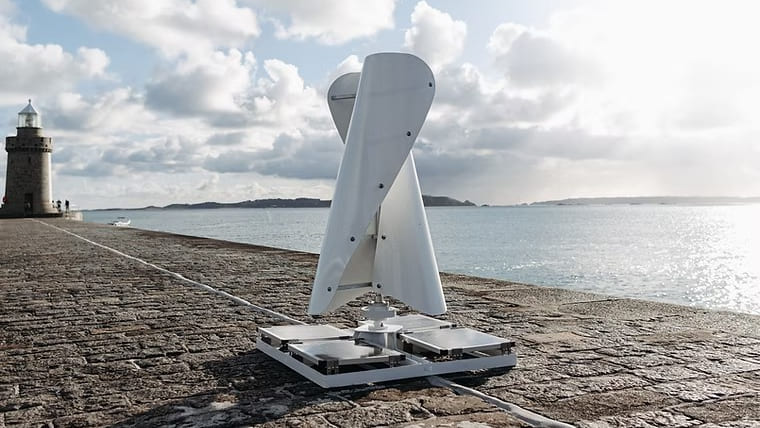
This guide uses a customized ELEGE EV 5kW vertical-axis wind turbine to explain how to estimate output, select the right system, calculate project costs, and assess the possible payback period.
Quick answer
The U.S. Department of Energy notes that a 5kW to 15kW turbine may make a significant contribution to typical household demand. This is only a starting range. Compare annual household consumption with estimated annual turbine output before choosing a model.
Start With Your Household Electricity Use
Check the last 12 months of electricity bills and add the monthly kilowatt-hours. A full year captures seasonal demand from air conditioning, electric heating, water heating, and electric vehicle charging.
The U.S. Energy Information Administration reported average residential consumption of about 865kWh per month in 2024, or roughly 10,380kWh per year. Your own bills are more useful than this national average because climate, house size, and heating fuel can change demand sharply.
You also need average daily consumption and maximum simultaneous load. Annual energy use helps size the generation system. Maximum load helps size the inverter. A house may consume 20kWh over one day but briefly require more than 6kW when a pump, refrigerator, and air conditioner start together.
Rated Power Is Not Annual Energy
A 5kW turbine operating at full power for one hour produces 5kWh. If it could maintain 5kW for every hour of the year, its theoretical output would be:
Wind does not remain at the rated speed all year, so real output is much lower. A preliminary estimate can use:
| Example capacity factor | Estimated annual output | Monthly average |
|---|---|---|
| 10% | 4,380kWh | 365kWh |
| 20% | 8,760kWh | 730kWh |
| 25% | 10,950kWh | 913kWh |
These figures are planning examples, not output guarantees. A serious estimate must combine the turbine power curve with the wind-speed distribution at hub height, then account for cable, controller, battery, inverter, downtime, and other system losses.
How Much Power Does the EV 5kW Produce at Different Wind Speeds?
The following values are approximate readings from the supplied customized EV 5kW power curve. Actual output can change with installation height, turbulence, air density, and system configuration.
| Wind speed | Approximate EV 5kW output |
|---|---|
| 4m/s | About 500W |
| 5m/s | About 1,000W |
| 8m/s | About 3,500W |
| 10m/s | About 4,750W |
| 11–12m/s | About 5,000W |
| 15–18m/s | About 4,100–4,300W |
The turbine reaches about 5kW near 11–12m/s. At 5m/s, output is closer to 1kW; at 8m/s, it is around 3.5kW. Start-up speed also does not indicate useful output. A rotor beginning to turn may still produce very little electricity.
Why One Average Wind Speed Is Not Enough
Two sites can have the same 6m/s annual average and produce different amounts of energy. One site may experience steady 5–7m/s wind for long periods. Another may remain calm for hours and then receive short, strong gusts. Buildings, trees, and roof edges can add turbulence that reduces output and increases mechanical loading.
Hourly or ten-minute wind records at the proposed hub height provide a better basis for calculation. Map the hours in each wind-speed range to the EV power curve, then subtract expected system losses and downtime. Regional wind maps can screen locations, but they cannot replace a site assessment.
Before requesting a final quotation, record the site coordinates, proposed hub height, surrounding obstacles, prevailing wind direction, and at least several months of measured wind data if available. Photographs or a simple site plan can help identify possible turbulence and tower-clearance problems. For a whole-house system, provide monthly electricity use rather than one annual total, because winter and summer demand may not match the seasons with the strongest wind.
Can the EV 5kW Meet Typical Household Demand?
Assume a house uses 9,000kWh per year and the owner wants wind to cover 80%. The target is:
At a provisional 20% capacity factor, a 5kW turbine produces an estimated 8,760kWh per year. Allowing 10% for delivery and conversion losses gives:
This may meet the annual target, but it does not mean the turbine can run every appliance at every moment. Low-wind periods still require the grid, batteries, solar panels, or another backup source.
At a 10% capacity factor, estimated generation falls to 4,380kWh, covering only about 49% of the same household’s annual demand. Site conditions can therefore change the result by a factor of two even when the rated turbine power remains 5kW.
Grid-Tied, Off-Grid, or Wind-Solar Hybrid?
Grid-tied home
A grid-tied turbine supplies household loads when wind is available. The house draws from the utility when output is low. Local rules and approved equipment may allow surplus export. A standard grid-tied system normally shuts down during a utility outage because of anti-islanding protection. Backup operation requires compatible storage, inverter controls, and an isolated backup circuit.
Off-grid home
The controller manages charging, braking, and excess energy. Batteries store electricity, while the inverter supplies AC power. A 48V 200Ah lithium battery has about 10kWh of nominal storage. For a home using 20kWh per day, one battery may not provide a full day of backup. Size storage from daily demand, allowable depth of discharge, critical loads, and desired autonomy.
Wind-solar hybrid
Adding solar often improves reliability where wind varies. Solar produces mainly during the day, while wind may contribute at night, in cloudy weather, or during seasons with weaker sunlight. Read our off-grid and grid-tied wind turbine comparison for more detail.
How Much Does a 5kW Wind Power System Cost?
ELEGE’s current 5kW wind turbine price guide provides the following reference configuration:
| Item | Reference configuration | Reference price |
|---|---|---|
| Basic kit | 5kW vertical-axis turbine + MPPT controller | $1,230 |
| Off-grid inverter | 11kW, 48V input, 220V output | $490 |
| Lithium battery | 48V 200Ah, about 10kWh | $1,050 |
| Complete off-grid equipment | Turbine, controller, inverter, and battery | $2,770 |
Price note: $2,770 is a reference equipment price for an existing 5kW configuration. It is not the final price for every customized EV 5kW project. Tower, foundation, cables, electrical protection, shipping, installation, commissioning, and local permits are quoted separately.
How Much Electricity Cost Could the System Save?
Consider a simplified example with 7,884kWh of usable annual generation, an 80% effective self-consumption rate, an electricity price of $0.165/kWh, and no assumed export income.
| Item | Calculation | Result |
|---|---|---|
| Usable annual generation | Planning estimate | 7,884kWh |
| Effective self-consumption | 7,884 × 80% | 6,307kWh |
| Reference electricity price | Example rate | $0.165/kWh |
| Estimated annual bill savings | 6,307 × $0.165 | About $1,041/year |
The $0.165/kWh figure is a U.S. residential electricity price example. Replace it with the local rate. If local rules allow energy export, add export income using the approved tariff and compliant grid-tied equipment. Do not assume that every unused kilowatt-hour can be sold.
Estimated Payback Under Different Project Costs
Simple payback is calculated as:
Using estimated annual savings of $1,041:
| Final installed cost | Estimated simple payback |
|---|---|
| $4,000 | About 3.8 years |
| $5,000 | About 4.8 years |
| $6,000 | About 5.8 years |
| $7,000 | About 6.7 years |
A three-to-five-year payback is possible only when wind conditions, electricity prices, self-consumption, and installation costs are favorable. It should not be promised for every project.
This simplified estimate excludes financing, annual maintenance, battery replacement, downtime, taxes, incentives, and future electricity price changes. A more complete calculation uses annual net benefit: electricity savings plus export income, minus annual operating and maintenance costs.
For a fully off-grid property, compare the system with the cost of extending the utility grid or running a diesel generator. Energy independence and avoided fuel delivery may be more important than a retail-electricity payback calculation.
Is a Rooftop EV 5kW Installation Practical?
The EV vertical-axis design receives wind from changing directions, but a 5kW turbine has greater weight, swept area, and structural load than a micro turbine. Do not install it on an ordinary roof without an engineering assessment.
Check roof capacity, mounting, safety clearance, vibration transmission, and turbulence. Where surrounding buildings disturb the wind, an independent tower often provides cleaner airflow and higher annual output.
Common 5kW Home Wind Turbine Sizing Mistakes
Treating 5kW as continuous output. The EV curve shows about 1kW at 5m/s and reaches 5kW only near 11–12m/s.
Using start-up speed as an energy claim. A rotating turbine may still produce very little usable electricity.
Ignoring tower height and turbulence. A large turbine in poor airflow may underperform a smaller, better-sited turbine.
Undersizing batteries and the inverter. Off-grid design must consider daily energy, motor starting power, and consecutive low-wind days.
Comparing turbine prices instead of project costs. Controllers, dump loads, batteries, inverters, towers, foundations, shipping, and installation all affect the final investment.
How ELEGE Sizes an EV 5kW Residential System
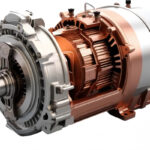
ELEGE can customize an EV 5kW vertical-axis turbine and wind-solar system for homes, farms, and remote sites. The EV structure receives wind from different directions. For suitable models, ELEGE combines a disc-type axial-flux generator structure with magnetic-levitation technology to reduce starting resistance and operating noise.
The turbine is only one part of the project. The MPPT controller, dump load, battery bank, and inverter must be matched to prevent voltage and capacity conflicts.
For a system recommendation, prepare the project location, 12 months of electricity use, average daily demand, maximum load, local wind data, proposed installation height, grid status, and battery or solar requirements.
Need an EV 5kW system estimate?
Send ELEGE your electricity demand, wind conditions, and installation details. We can recommend a turbine, storage, inverter, and hybrid configuration for your project.
Conclusion
One wind turbine can power a house, but the 5kW rating alone cannot answer the question. The customized ELEGE EV 5kW produces about 5kW near 11–12m/s. Whole-house coverage depends on the complete wind-speed distribution, annual electricity use, system losses, and storage capacity.
For a home using around 9,000kWh per year, the EV 5kW may cover a high share of demand if the site achieves a 20% capacity factor. Under the example assumptions in this guide, an installed project cost of $4,000 to $7,000 gives a simple payback of about 3.8 to 6.7 years.
These figures explain the calculation method. They are not fixed output or payback promises. Use measured wind data, local electricity prices, and a complete project quotation before making a decision.
Frequently Asked Questions
Can the EV 5kW power an entire house?
It can at a suitable site. The curve shows about 5kW at 11–12m/s but only about 1kW at 5m/s. Combine the local wind-speed distribution with household consumption to estimate annual coverage.
How much energy can a 5kW wind turbine produce per year?
At example capacity factors of 10%, 20%, and 25%, estimated annual output is 4,380kWh, 8,760kWh, and 10,950kWh. Use the site’s wind-speed frequency distribution and turbine power curve for a real estimate.
Does the $2,770 reference price include installation?
No. The reference price covers a 5kW vertical-axis turbine, MPPT controller, 11kW inverter, and 48V 200Ah lithium battery. It excludes the tower, foundation, cables, shipping, installation, and local permits. A customized EV 5kW requires a project-specific quotation.
How long does an EV 5kW system take to pay back?
Under the example assumptions, a total investment of $4,000 to $7,000 gives a simple payback of about 3.8 to 6.7 years. Wind conditions, electricity rates, self-consumption, maintenance, and battery replacement can change the result.
Is a wind turbine alone enough for an off-grid house?
Usually not. A complete off-grid system also needs a controller, dump load, battery bank, and inverter. Many homes add solar panels or a backup generator to reduce the risk of consecutive low-wind days.