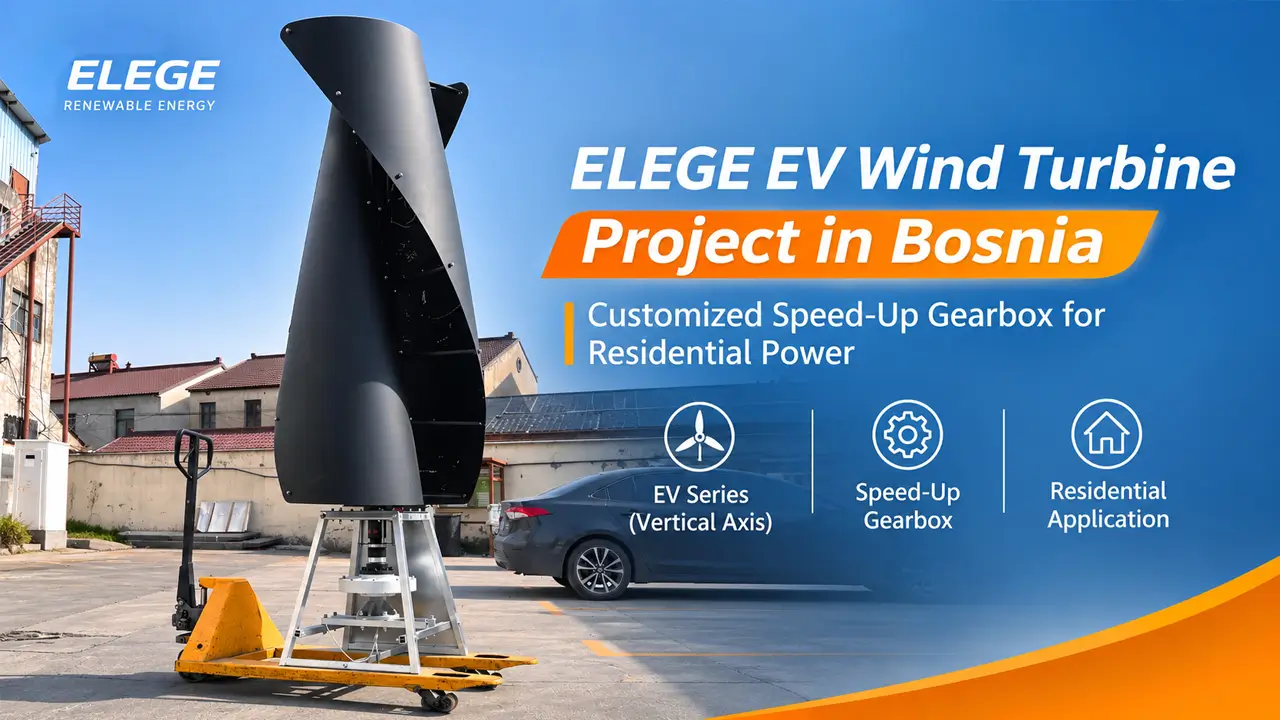
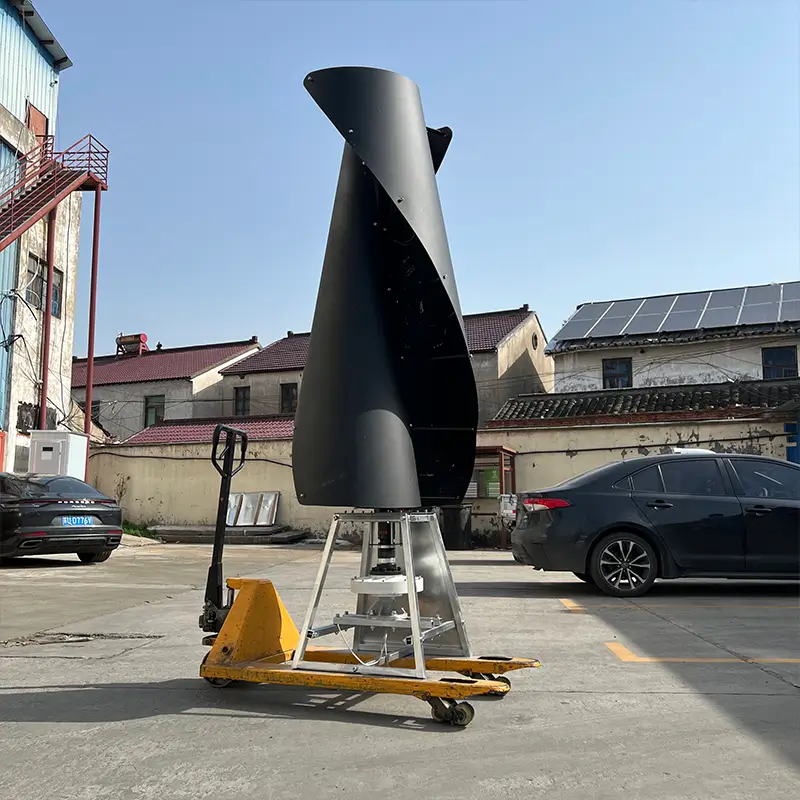
In March 2025, ELEGE delivered a customized EV Series vertical axis wind turbine to a customer in Bosnia for a residential power project. The turbine features a black spiral rotor, a mechanical speed-up gearbox, and a dedicated metal support structure.
Unlike a standard EV turbine configuration, this customized unit uses a geared drivetrain. The gearbox adjusts the rotational speed between the rotor and generator. As a result, the project highlights the importance of matching mechanical transmission characteristics with generator requirements.
In this case study, we examine the delivered equipment, explain the gearbox’s operating principles, and explore the engineering considerations behind this residential wind turbine project.
1. EV Wind Turbine Project Overview in Bosnia
Project Background and Specifications
The customer in Bosnia needed an EV Series wind turbine for a home power application. Therefore, ELEGE supplied a customized configuration featuring a mechanical speed-up gearbox and black spiral blades.
The equipment photographs show the assembled turbine and its supporting mechanical structure. Although ELEGE confirmed the equipment delivery, the company has not published the exact rated power, installation details, or measured operating results. Consequently, this case study focuses on the turbine’s mechanical design rather than unverified energy production claims.
| Bosnia Project at a Glance | |
|---|---|
| Destination | Bosnia |
| Turbine Series | ELEGE EV Series |
| Application | Residential power |
| Rotor Type | Spiral vertical axis rotor |
| Drivetrain | Mechanical speed-up gearbox |
| Rotor Finish | Black |
| Rated Power | Not disclosed |
| Project Status | Equipment delivered |
What Makes This EV Configuration Different?
The main difference is the combination of an EV spiral rotor and a customized mechanical gearbox. Instead of connecting the rotor and generator through a direct-drive arrangement, the gearbox introduces a transmission ratio between their rotational speeds.
In addition, the black rotor finish and metal support frame give the equipment a distinctive appearance. Together, these features distinguish the Bosnia unit from the general configurations in ELEGE’s EV product range.
2. Why This EV Wind Turbine Uses a Speed-Up Gearbox
How the Gearbox Matches Rotor and Generator Speeds
Wind turbine rotors and electrical generators do not always operate most effectively at the same rotational speed. Therefore, engineers sometimes introduce a speed-up gearbox to adjust the mechanical relationship between these components.
For example, a theoretical gearbox ratio of 1:3 would convert an input speed of 100 rpm into an output speed of approximately 300 rpm. However, this calculation only illustrates the transmission principle. It does not represent the confirmed gear ratio or operating speed of the Bosnia turbine.
In this project, the gearbox provides the required speed-conversion function within the customized drivetrain. Engineers must still consider rotor torque, generator characteristics, and expected operating conditions when selecting the appropriate ratio.
Gearbox Versus Direct-Drive Configuration
Geared and direct-drive wind turbines use different approaches to match rotor rotation with generator requirements. Each approach has advantages and limitations. Therefore, the most suitable configuration depends on the overall mechanical and electrical design.
| Comparison | Geared Drivetrain | Direct Drive |
|---|---|---|
| Speed Matching | Uses a transmission ratio | Uses a generator matched to rotor speed |
| Mechanical Losses | Includes gearbox losses | Avoids gearbox losses |
| Maintenance | Gearbox inspection may be required | No gearbox to maintain |
| Main Design Focus | Ratio, torque, efficiency, and alignment | Low-speed generator matching |
However, increasing rotational speed does not create additional energy. Instead, the gearbox trades rotational torque for speed while introducing mechanical losses.
Consequently, the engineering objective is not simply to achieve higher rpm. Engineers must determine whether the selected gearbox allows the generator to operate effectively with the available rotor torque and wind resource.
Startup and Mechanical Loading
Gearbox selection also affects the resistance that the rotor experiences during operation. For instance, excessive mechanical drag, unsuitable transmission ratios, and poor shaft alignment may interfere with startup and reduce performance in lighter winds.
This consideration matters for residential turbines because surrounding buildings and changing weather conditions may create fluctuating airflow. In addition, gearbox friction and bearing loads influence the mechanical efficiency of the entire drivetrain.
Therefore, engineers should examine gearbox efficiency, starting torque, alignment, and long-term reliability before finalizing a geared wind turbine design. ELEGE has not published project-specific test data showing an efficiency improvement for the Bosnia unit.
3. Inside the Customized ELEGE EV Turbine Design
Black Spiral Rotor Construction
The Bosnia turbine features the recognizable curved blades of the ELEGE EV Series. Its vertical axis design allows the rotor to receive wind from different horizontal directions without continuously turning the rotor assembly toward the wind.
Meanwhile, the spiral geometry gives the turbine its distinctive appearance. Engineers must also consider blade strength, rotational balance, and aerodynamic loading to support stable operation.
The black finish provides another customized visual feature. However, the available project information does not specify the coating composition or a particular corrosion-resistance rating.
For an overview of standard models, visit the ELEGE EV vertical axis wind turbine series. Keep in mind that the published specifications for standard EV models may differ from those of this customized geared unit.
Central Shaft, Coupling, and Generator Mounting
The close-up photograph provides a useful view of the turbine’s lower mechanical assembly. In particular, it shows the central shaft connection, coupling components, generator mounting area, and surrounding metal frame.
These components form part of the mechanical arrangement that supports the drivetrain. Proper shaft alignment and secure connections help transfer rotational motion while limiting unnecessary vibration and wear.
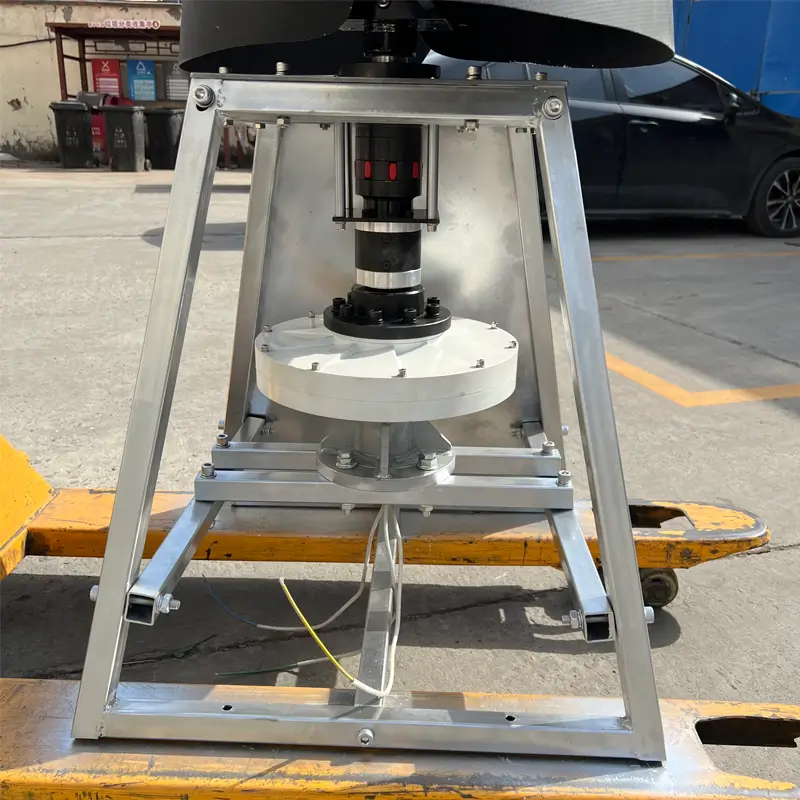
In addition, the gearbox forms part of the project’s customized drivetrain specification. However, the photograph alone does not reveal its internal gear arrangement or precise position within the mechanical transmission.
Support Frame and Installation Considerations
The turbine’s metal frame includes angled supports, horizontal members, mounting plates, and bolted connections. Together, these components support the lower mechanical assembly and maintain the positioning of connected parts.
During operation, the final installation must withstand aerodynamic forces, rotational vibration, and changing mechanical loads. Therefore, engineers must assess foundation strength, anchoring, alignment, and maintenance access.
Furthermore, the workshop frame in the photographs does not establish the final tower or foundation arrangement at the customer’s residential site.
4. Engineering Considerations for Residential Wind Power
Site Conditions and Electrical Requirements
The customer selected this EV turbine for a home power application. However, the suitability of any residential wind turbine depends on more than its rotor design or nominal output.
First, homeowners and installers should assess local wind conditions, turbulence, mounting height, and nearby obstacles. Next, they should compare the available wind resource with the household’s electricity consumption and peak demand.
In addition, the electrical system must match the generator’s output characteristics. Depending on the application, the complete installation may require a suitable wind controller, electrical protection, battery storage, an inverter, and braking or diversion-load equipment.
For further information, ELEGE explains the differences between rooftop and ground-mounted wind turbines and provides guidance on off-grid wind power systems. These resources cover general installation choices rather than the unverified site configuration of the Bosnia project.
What Can We Confirm About This Project?
The available information confirms that ELEGE delivered a customized EV wind turbine with a speed-up gearbox for a residential power application in Bosnia. Moreover, the original equipment photographs document its black spiral rotor and supporting mechanical structure.
However, ELEGE has not published verified on-site generation records, a completed installation report, or measured household energy savings. As a result, this case study does not estimate annual electricity production or claim that the turbine meets the home’s entire power demand.
5. Lessons from the Bosnia EV Wind Turbine Project
Mechanical Customization Requires System Matching
The main engineering lesson is straightforward: a wind turbine gearbox must work as part of an integrated rotor-generator system. Although a gearbox can increase generator shaft speed, higher rpm alone does not guarantee greater electricity production.
Instead, engineers must balance rotational speed, torque, transmission losses, starting characteristics, and maintenance requirements. Consequently, gearbox selection should reflect the technical needs of the complete turbine rather than one isolated performance parameter.
The Bosnia project illustrates this customized drivetrain approach. It does not suggest that every residential EV turbine requires a gearbox.
Preparing a Similar Custom EV Project
For a similar project, buyers should first provide the installation country, intended application, available wind data, and expected electrical demand. They should also identify any installation space limitations or specific mechanical requirements.
If the project calls for a gearbox, information about generator speed, expected torque, and operating conditions can support the design discussion. Therefore, providing accurate project details helps ELEGE evaluate whether a geared or direct-drive arrangement is more suitable.
Frequently Asked Questions
Can ELEGE customize the gearbox ratio for another EV turbine project?
ELEGE can evaluate a different transmission ratio during project-specific engineering discussions. However, feasibility depends on rotor torque, generator requirements, mechanical loading, and gearbox design. Engineers must confirm the final ratio before production.
What information should I provide when requesting a residential EV turbine?
Start with your installation location, wind conditions, available mounting space, daily electricity consumption, and intended electrical system. In addition, mention any preferred voltage, battery arrangement, or mechanical constraints so the technical team can evaluate your requirements.
What should installers check before commissioning a geared wind turbine?
Installers should review mounting security, shaft alignment, gearbox condition, electrical protection, and lubrication requirements. They should also follow the manufacturer’s installation and operating instructions. Finally, the commissioning process should confirm that the complete turbine system operates within its specified limits.
Conclusion
The ELEGE EV wind turbine project in Bosnia highlights a customized residential power solution featuring a black spiral rotor and mechanical speed-up gearbox.
More importantly, the project illustrates why engineers must match rotor characteristics, gearbox performance, and generator requirements when developing a customized wind turbine.
Need a Customized EV Wind Turbine with a Gearbox?
ELEGE supports project-specific discussions covering EV turbine configurations, drivetrain requirements, and generator matching. Whether you are planning a residential installation or another small wind power project, our team can help you evaluate suitable equipment options.
Share your location, wind conditions, and electrical requirements to start the discussion.